


For this episode of Unseen Unknown, we’re talking about meaningful spaces and how to create them.
I study culture for a living, but a big part of my work has become a matter of creating spaces where people can indulge in one another. It’s not easy to create the perfect pocket of time where people feel safe enough to be vulnerable, but if you can do that, you create a very strong before-and-after effect. People go into that space one person, but they emerge from it another.
The lion’s share of culture can be described as people wanting to experience themselves changing. Getting to do that in these microcosms of my events, gatherings, and communities has been incredibly impactful to me and my work.
Through our client engagements at our agency, Concept Bureau, we create deep experiences where, by the end, our clients have a new brand strategy - but more importantly, they are a changed team.
In our community Exposure Therapy, which is now over 140 members from around the world who are all executives or brand builders, I create both virtual and real-life moments of transformation.
And in my personal life I’m a glutton for punishment, so I throw huge annual parties for Halloween, for Persian New Year, and for my kids’ backyard campout themed birthdays.
I’ve learned that meaningful spaces have nothing to do with the aesthetics, or if it’s virtual or in real life. They have nothing to do with the fact that it’s a party or a board meeting, if it’s for clients or for friends, among people who love each other or among strangers. None of those things matter.
Meaningful spaces are about creating the conditions for change. People so desperately want to feel themselves evolving. They want to grow and transform. It is the deepest thrill you can have in this human experience.
That evolution is the directive of a meaningful space.
You can’t force that kind of change, but you can make it inevitable with the right strategy.
Part 1: Designing the experience
1. People are looking to find each other.
Everything feels the same. As Kyle Chayka famously named it, we’re surrounded by airspaces: blank, liminal canvases that make it hard to distinguish between a coffee shop, a coworking space, or an overpriced speciality grocer. They’re all white, glossy, familiar… and meaningless.
Meanwhile, the digital world has essentially become the dead internet, where trust has all but completely collapsed. Whether we’re online or in the same physical space, we feel distanced from one another, but special spaces are the antidote to that. They are specifically designed to help people not only come together but find each other.
Finding each other is not a matter of cute decor or merch or photogenic food. Finding each other is about a deep exchange of energy between people. Never forget this. This is the ‘why’ behind everything else when you are creating a meaningful space.
2. Map expectations so you can interrupt them.
This is the thesis of the entire podcast episode above —> Map every expectation people will bring to your space, then work against them.
When expectations are interrupted (as we describe in the video with Priya Parker’s candle in the boardroom), people can’t bring their biases through the door. It’s those biases that make people act in predictable and shallow ways when it comes to a gathering, but that’s not what you want when you’re creating a meaningful space. You want people to surprise each other, including themselves, and you want them to go deep.
Disorientation, done well, is an incredible feature. It puts everyone on equal footing, but more importantly, it creates a vulnerability in the moment that is the precursor for transformation.
3. Every meaningful space needs a host with EQ.
Hostless spaces will never really work to create meaning because there needs to be one person that embodies the entire spirit of the gathering. That person needs to demonstrate the permissions that everybody has in the space. They need to set the tone and energy, and they need to be the pillar that everybody else pulls direction from.
I often joke that hosting is like parenting. And I don’t just mean hosting in physical spaces, but also hosting virtual discussions (like when we’re talking about emotionally charged topics as a group, which is most of the time in Exposure Therapy). Your only real job as a parent or as a host is to hold your own energy. The rest of the room will align to it.
I am still honing my EQ, that part of my learning journey will never end (have not reached elite level yet), but I can tell you with confidence that gaining emotional intelligence is mostly a matter of conquering your own ego. You need to get out of your own way to really tap into the needs of the group.
That’s why very few people make naturally talented hosts. It is a very psychically demanding job.
Aesthetics and budget alone never produce a meaningful space. Brands often get this wrong, and that’s why they will hire influencers instead of community builders for their higher-stakes gatherings. What they misunderstand is that a community builder has a set of soft skills that are absolutely impossible to replicate, and those skills are everything when it comes to creating a container in which people will be transformed.
4. People want to be chosen, so choose who’s in the room.
Any kind of selection, even symbolic exclusion (like Soho House famously not allowing Britney Spears into their membership), affirms people’s identities. Good or bad, this is just human nature, and it’s something that I’ve learned not only in my work as a community builder, but also as a brand builder.
A more productive way to see this quirk of humanity is to read it the way Seth Godin phrases it: “People like us do things like this.” Deciding who is in and who is out signals to people the kind of meaningful space that you’re creating, as well as the kind of people that belong in it. It helps prescribe an identity people can live up to.
On our info sessions for Exposure Therapy prospects, I make it very clear that our community is specifically for generous people. Not only do you have to be intellectually impressive, but you have to have a generous character to go along with it. When I signal to people that that is who belongs here, then that is how people act once they’re inside.
As Robert Cialdini says, identity shapes behavior. I interview every prospect, personally handle every onboarding. I know these are not scalable activities, but they are the most fundamental to building the kind of culture that we want, so I take them seriously. The act of choosing is load bearing work.
Part 2: The threshold
5. Create a threshold people can feel.
A threshold is the demarcation between the ordinary world and the special world you’re inviting people into, and people have to feel that crossing if you want it to matter.
Thresholds can happen before people arrive or at the door. It can be demanding a certain kind of uniform or people taking off their shoes. It can come to life in things like whispering rooms and scented weddings or Disneyland’s compressed archway entrance.
Thresholds don’t just have to be physical locations or red carpets. They can be tasks or codes or rituals. What makes it a threshold is that it marks the line between what happens on the outside versus what happens on the inside.
Most importantly, the line has to be felt. When people feel that line, it helps them release their biases and gives them a blank slate with which to experience the moment.
6. Don’t be afraid to ask for a commitment.
Anything meaningful comes with a cost, so it only makes sense that a meaningful space would have its own costs of entry. People are starved for rich, deep experiences and are far more willing to pay alternative costs (dressing up, preparing intentions, doing pre-work) than hosts assume. Asking more as cost of entry makes the space more powerful, and participation in creating the space is part of the appeal.

I’ve said many times before that you can only ever build half a community. The other half is built when people show up, so give people a way to show up with intention.
Part 3: What awaits inside
7. Meaning comes from distinct permissions.
The more different your space’s permissions are from everyday life, the more meaningful it is. As my partner Jean-Louis says, you want to “run to the end of the bell curve”.
Novelty forces presence. Our socially wired brains scramble to figure out the new rules, which in turn brings all our senses online. One of the biggest enemies of a meaningful space is people being physically present but mentally absent.
In this keynote, I talk specifically about how to create distance from the norm, and how it is precisely that distance that creates the kind of vulnerability that leads to greater trust in a group (timestamped to the section):
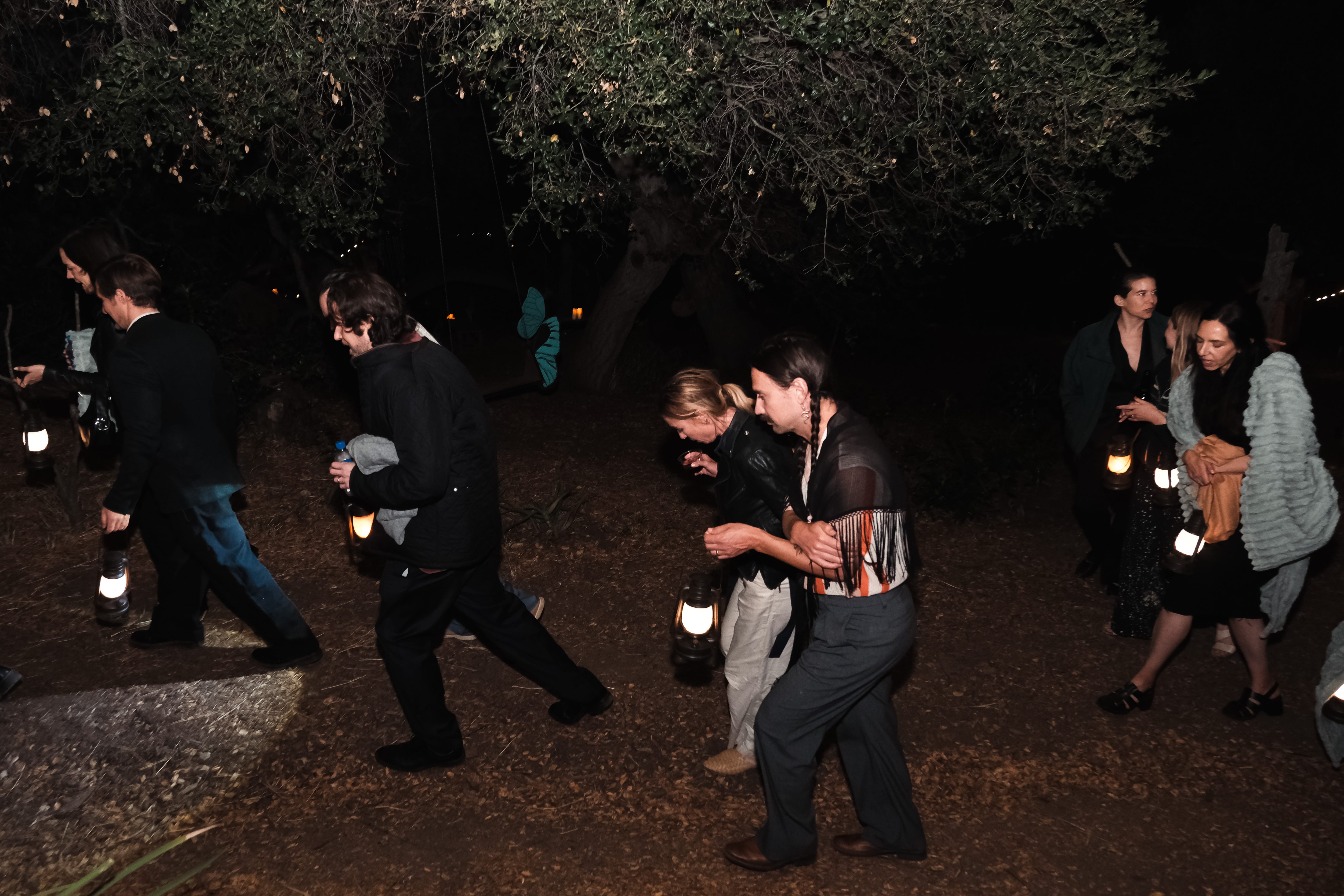
You want to create permissions that are far from the norms of the everyday so people know they’re in a different reality. Permission to scream, permission to cry, permission to touch each other, permission to lie, permission to pretend.
Every permission is a way to go deeper.
8. The permissions you don’t allow matter, too.
High-trust spaces require decorum you might be uncomfortable enforcing. There may be cameras on, dress codes, RSVP rules, accepting introductions and the like.
Norms are mimetic, so it’s important to establish culture carefully with the first few people and trust that everyone else will follows. Loud voices outweigh quiet ones, so a few dissenters can steer things wrong. Be tight early, then ease off once the culture holds.
I was tight about my rules for the first year and a half of our community. Now that we’re over two years in, I can trust that enough of the culture has been engendered with this group and I have enough fully invested members that embody the norms I want to propagate, but that took a lot of vigilant work up front.
I do still, however, remain serious about certain things, like people showing up on time, or members posting meetup photos in our group Slack. These small things are gestures of respect to the group and again, another way of saying, “People like us do things like this.”
9. Engineer interdependence.
If you really want to shake up people’s expectations, make them do the one thing they probably run away from in real life: depend on each other.
Engineering interdependence in a meaningful space creates exactly the kind of vulnerability you need for transformation to take place, but it also allows for the exchange of energy that we’re looking for.
A well done gathering will let that exchange happen incidentally, but engineering it into the experience will help it go even deeper.
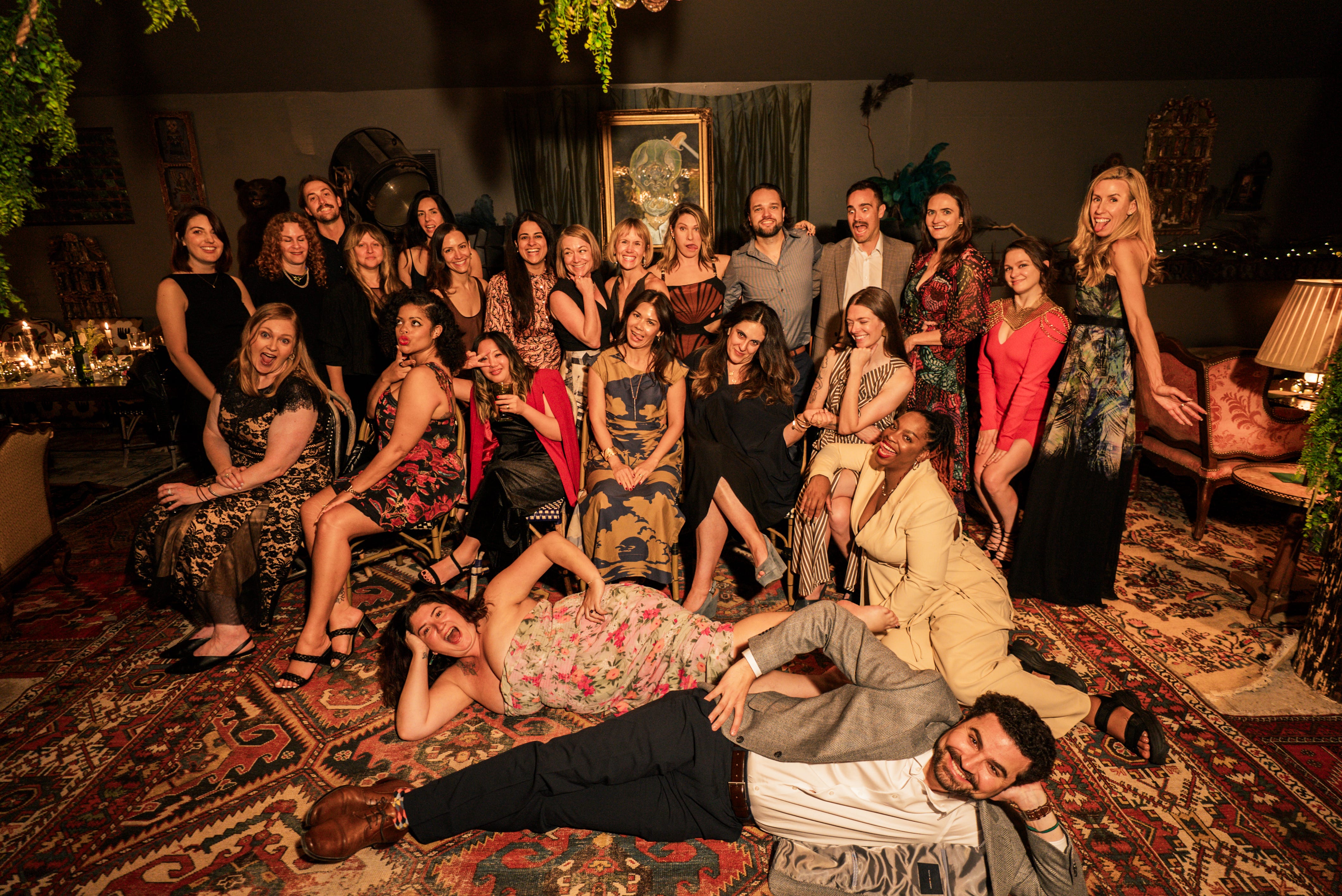
Small mechanics work just as well as big ones. It can be as simple as requiring everybody to take a picture with a Polaroid camera (which means they’ll need to ask somebody else in the room to take their picture for them) and then a conversation springs up from there, or as grand as scavenger hunts and designed Q&As.
Part 4: Don’t neglect the ending
10. Close the back door.
The exit threshold matters as much as the entrance.
Experiences need a defined ending or they fizzle (think the sad WhatsApp group after the conference ends). There’s been plenty of research around the fact that even in the worst experiences, if the last few minutes of that experience are positive, people remember the overall experience generally better.
Don’t waste the ending of your meaningful event. The ending is just as important as the beginning, and you can create a threshold there too.
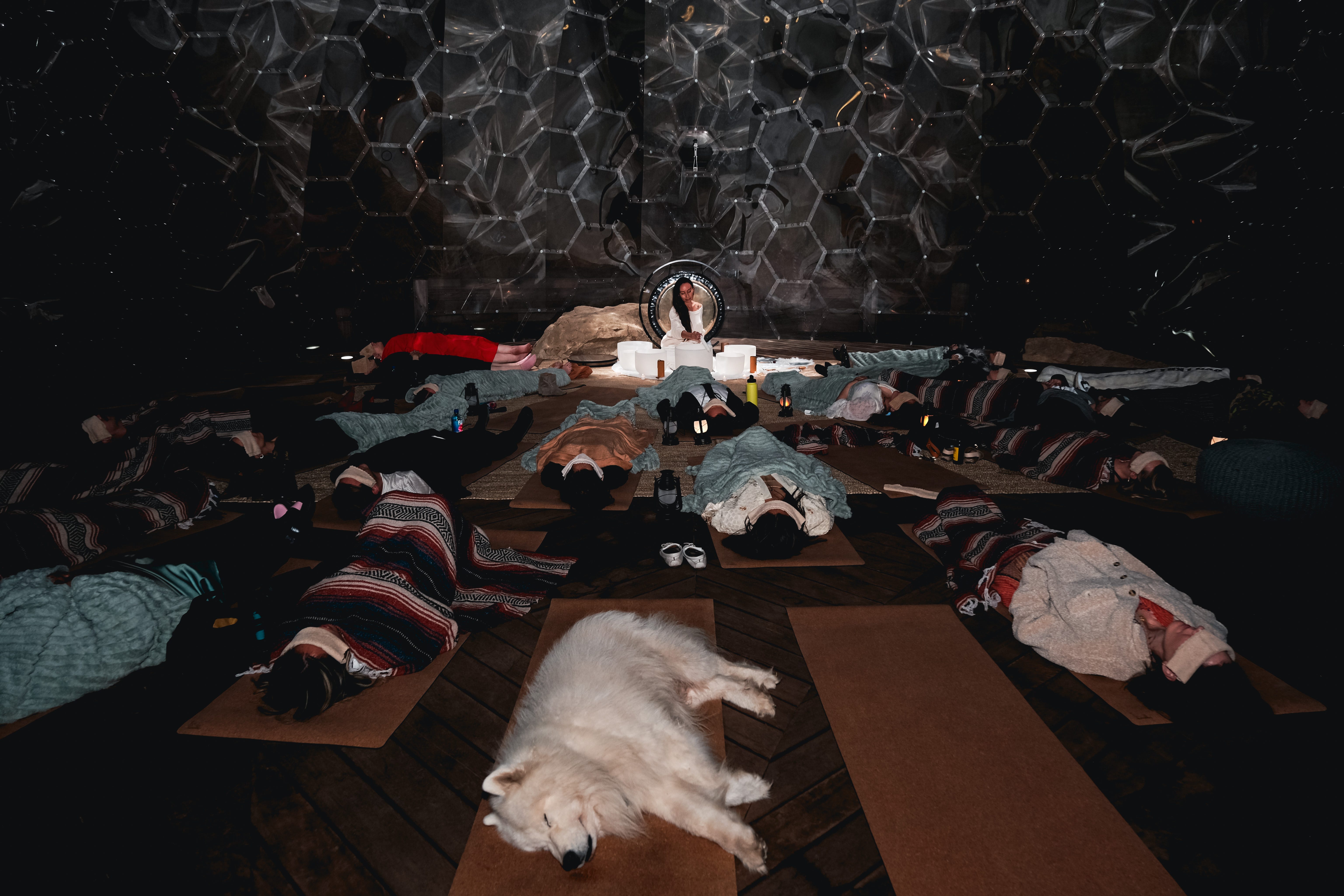
At our recent Exposure Therapy Midnight Solstice, we actually did a sound bath at midnight, in a giant dome under the stars. Even the property dog joined us. Being in that space with those people at midnight, setting our intentions for the new summer season as a way to close out the evening, changed the overall tenor of the event.
11. Beginnings and endings shape memory.
We remember experiences by their beginnings and endings, not their averages. That’s why Disneyland ends with fireworks and concerts end with encores. Our culture is so starved for endings that being thoughtful about how your meaningful space concludes itself will already stand out in people’s minds.
Endings are what help us digest and reflect. They tell us when we have emerged as a new person. When we live in a society that offers no natural endings, especially in America, scripting a beautiful ending is nothing short of a gift:
A deliberate ending directs people’s attention to what was valuable, and directing attention is how you shape memory, which is how people assign value to the experience.
It’s not a protected moment in space and time if it doesn’t have clear boundaries around when it began and when it concluded. Be thoughtful about how you set those boundaries up beforehand.
You can also listen to this episode of the Unseen Unknown podcast on Apple Podcasts, Spotify, or your favorite platform.
Winning Bets
I host a private group of 140+ executives, founders and strategists that all need a deeper understanding of cultural shifts that are happening right now in order to succeed at their jobs.
Exposure Therapy will not only give you confidence to make bold moves with your brand, it will give you the insight you need to make winning bets.
I’m holding our next info session this Wednesday. Come join us and I’ll show you what it’s all about.
One Last Thought
If you’ve ever wondered what the gold “9” necklace around my neck means, this is the true story. It’s also a story of why you should create your own mythology.

People often assume it’s is astrology or numerology, and they love to tell me what it means. I never correct them because I like those stories, too, but it actually came after a fight with my husband Jean-Louis Rawlence.
I was trying to clear the tension in the air so I cracked a joke/ question as I often do. I asked him, “On a scale of 1 to 10, what am I?” and without missing a beat he said, “You’re a 9, but you could be a 10 if you had a good attitude.” And I cracked up laughing! Then he bought this necklace to commemorate the argument.
He could have been cruel in that moment, but he’s never once been cruel. Ever. And I’ve never known another man like that in my life.
I grew up in a tough household. There was a lot of anger and fury and emotional instability, and I grew up holding on to that anger and difficult emotions for years.
But somehow my relationship with Jean-Louis has always been about laughing at our worst moments. We’ve developed a really strong muscle of mythologizing, turning our hardest situations into funny stories we tell. Building multiple businesses together, getting out of the bad situations we were raised in, raising 3 kids with incredible intention to give them what we didn’t have... we’ve survived a lot.
And so our mythology is powerful but simple: we can get through anything together. Nothing can overcome us as a partnership.
And to be clear, I know I’m not a 9 ;) But he thinks I am, and that’s all I need. I don’t even want to be on a scale like that, but when I look at this necklace, I feel that I’m in a safe place, that I have lots of love, and that life is actually quite easy.
Mythologies are true because we repeat them. So I keep repeating this one, that we can bounce back from anything and build something new and beautiful.
This is an excerpt from an interview I did with my friend Preeti Varma for An Object Story. You can read the full interview here.
Yours,

Hi, I’m Jasmine Bina. I’m a cultural futurist. If you love this newsletter and need more:
My private culture and strategy community Exposure Therapy
My 3-week masterclass on How To Build A Culture Brand
My agency Concept Bureau


